Colombia: One Hundred Years of Solitude
The votes said one thing, the machines said another, and the family that owns the machines is not talking.
- capitalism
- politics
- fascism
- liberalism
- organizing
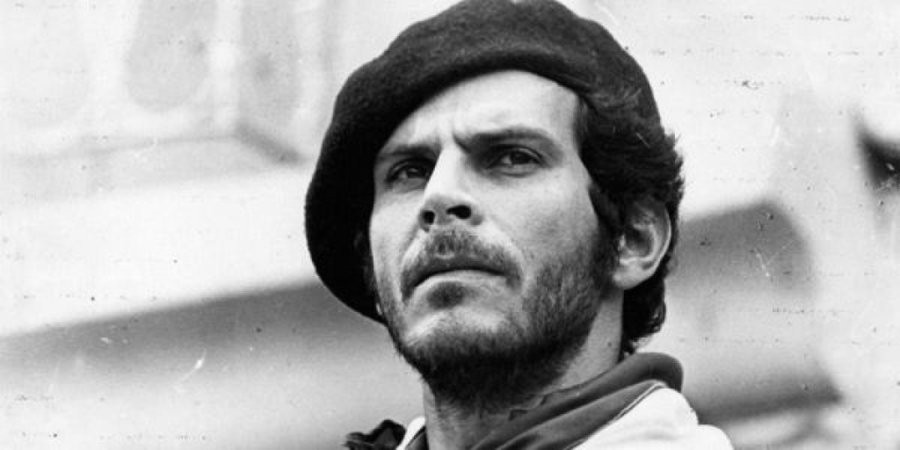
"El deber de todo cristiano es ser revolucionario, y el deber de todo revolucionario es hacer la revolución."
("The duty of every Christian is to be a revolutionary, and the duty of every revolutionary is to make the revolution.")
Camilo Torres Restrepo, killed in combat, 1966
Election night, June, and the tally sheets, the E-14 forms that thousands of citizen table officers fill by hand in front of witnesses and photograph on their own phones, began to disagree with the official consolidation, sums that did not add, the count from a table flipping between the preliminary and the final numbers, and it is worth saying plainly that the state's own election body once counted 22,255 inconsistent forms in a single electoral cycle and quietly forwarded the file to prosecutors, so this noise in the record is not a conspiracy theory, it is the institutional record describing itself.
The family that counts the votes
The company is called Thomas Greg & Sons, it sounds British because it is, sort of, its legal birth was registered in 1991 on the island of Guernsey, a rocky crown dependency famous mainly for not telling anyone anything, and its ancestry is immaculate, it began as the local representative of Thomas de la Rue, the firm that printed stamped paper for the British Empire, so the genealogy of the thing that certifies Colombian democracy runs directly through the royal mint of the empire that Monroe declared this hemisphere safe for.
The family that owns it, the Bautista family, inherited the operation from the founder, Gregorio, who bought it from the English and passed it to his children, who have lived off state contracts for three generations, passports, registries, identity documents, and the firm is not merely a printer, it is a security company, armored transport of valuables, private guards, and the handling of the most sensitive documents the state produces, cheques, stamps, electoral cards, cédulas, the same envelopes your salary travels in and the same machines your vote is counted by, with at least 28 major public tenders to its name.
And then, in 2025, the greatest prize of all, the total logistics of every Colombian election, from the ink on the ballots to the software that adds them up, 2.1 trillion pesos, around half a billion dollars, handed over in a tender where their consortium was the only bidder, one offer, no competitor, complaints dismissed by the same office granting the award, the kind of auction where the only real suspense is whether the buyer remembered to bring its own pen.
The silence around the name
You will not have heard their name before this piece, and that silence is part of the arrangement, because a company this deeply welded to the state should be a household word in any healthy democracy, and its absence from household conversation is not luck, it is the payoff of sixty years of discretion, purchased alongside every contract. And the story does not begin with this election either, the courts had already met this family once, because Colombia's highest administrative court, the Consejo de Estado, in full session, ruled on this same company's counting software after the 2014 senate elections, where a subsidiary called ASD ran the pre-count, and the court found what it found: sabotage, thousands of altered records corresponding to more than fourteen hundred voting tables that did not follow the route the electoral registry itself had drawn, results changed with the paper ballots untouched, and its recommendation was simple, build the state's own software, keep this work in public hands.
Twelve years later nothing was built, and the same family, under a Guernsey shell, rented the state the same unauditable code, and when the outgoing president asked the country to notice, the registry answered by demonstrating the software to a small audience for three days and calling it an audit, which is like demonstrating a locked safe by showing that you can close the door.
The concession
The candidate of the left, Iván Cepeda, a senator who inherited his father's seat and his father's cause, his father a UP senator, murdered for holding it, contested the result for weeks, the lawsuits were filed, dozens of them, and then he conceded, and the newspapers printed it as dignity and moved on. Sit with what conceding meant in that place. He stepped down knowing what the alternative looked like, because every Colombian leftist knows, because the UP taught them, a mass of angry people in the streets is exactly what the security apparatus is built for, and the trap has a shape you can recognize from a hundred years of practice: squeeze the population with hunger and taxes, wait for the people to rise, then name the rising terror, then prosecute the named, and take them out of circulation through prison, exile, or the old third method, the one with the motorcycle and the gun that the UP knows best. A concession in that light is not surrender, it is a man refusing to hand them the bodies they needed.
The same playbook on other screens
And the pattern is playing on other screens the same season, because the region's elites run the same playbook off the same shelf, and they run it the way the Buendías ran their catastrophes, each generation repeating the last one's ruin with fresh confidence that this time it will go unpunished. In Brazil, a few months after the Colombian count, Lula won a fourth term in October, just over half the vote, and the defeated candidate, a younger Bolsonaro, son of the former president who has been watching from house arrest after being convicted for attempting a coup, did what the surname does, he flew to Miami on a private jet in open defiance of a Supreme Court travel ban, his passport cancelled over a laundering probe, joining the long tradition of Latin American elites who commit their crimes at home and do their waiting in Florida.
In Paraguay the president, Santiago Peña, resigned hours ahead of his own removal, a resignation calculated to fast-track him into legal immunity, and the parliament pushed the impeachment through anyway, because the crime had a shape everyone recognized, the state pension fund parked hundreds of millions of dollars in a private bank tied to his own family, beyond every legal limit, and when the bank collapsed so did the retirement funds of an entire country's workers, the same maneuver the region's elites have practiced forever, privatize the winnings, socialize the collapse, and if it can be arranged, grab the immunity on the way out the door like a pair of car keys.
And Argentina, meanwhile, shows what the squeeze looks like at its terminal stage, because in Javier Milei's laboratory of the newest shock program, the butcher shops of the popular districts started selling donkey meat, beef having priced itself out of the reach of the people who raise it, an export commodity now, consumption down by a fifth, donkey at a third of the price, testimony arriving the way working people's truth always arrives now, through phone recordings and neighborhood interviews, a country eating its beasts of burden while its finance minister collects international prizes, and that is not a curiosity, that is the Colombian food basket a few steps further down the same road.
No messiahs, only movements
There is a trap inside all this history that the powerful set and the earnest keep stepping into, the great man theory, the search for the individual to save us, the caudillo of the week, the notion that the story pivots on heroes and traitors. Look back at every real advance named in this piece and you find the opposite, the UP won seats because thousands of ordinary people organized in their barrios, Petro reached the presidency riding a coalition built over decades by students and indigenous councils and strikes, Lula returned on the backs of the largest landless movement on earth, and the governments fall into parliamentary immunity maneuvers not because individuals became corrupt but because the class they serve was always comfortable and always at work. The movement belongs to the masses, the successes and even the martyrs belong to the masses, and every attempt to reduce it to a face is a gift to the machinery, because faces can be sanctioned, surveilled, smeared, exiled and killed, whereas a working class that understands its own history regenerates, cut off one head and the soil produces another, ask any landlord who has tried.
Something else is quietly changing, and I want to end facing it. For generations the word socialism was the empire's favorite scarecrow, waved at every strike and every land petition, and the spell worked because the people who remembered the UP died with it broken, but the young have grown up watching capitalism run out of alibis, indentured by rents and debts, watching their parents work until illness and be discarded, being told on every screen that this is simply the weather, and the scarecrow keeps appearing and simply no longer scares anyone, fewer of them every year, which is the one trend the landlords cannot sanction. They lost the word back to the people it was taken from.
Where we go from here
So what does one do with a history like this, the honest answer is older than any doctrine, unite, because every successful chapter above was collective and every defeat was isolation. Build the community before the crisis, the strike fund, the meeting, the care network that checks on the elderly neighbor and knows which family lost their house, support each other's battles as one battle, the fishermen of Chocó and the students of Bogotá and the miners of Cauca and the mothers of the disappeared who refuse to let their children be filed away. Starve the mouthpieces of the empire of their only real currency, your attention, do not argue with the professional influencers of the ruling order, do not boost them for sport, do not dignify the discourse, they are paid per engagement and every quote-post is a paycheck, let them shout into the silence their clients deserve. And take the inspiration that history is genuinely offering, because we are not the first to face this and the people before us, with less, organized unions into the massacre years and built unions and mingas and peace processes out of the ruins of worse nights, the instruction manual exists and it was written by people who could not read it without dying, honor them by using it.
If you are reading this from the comfort of the imperial core, Canada in my case, do not mistake proximity for safety, because the squeeze arrives home on schedule too, the same landlord's note hangs over your rent, your groceries, your working conditions, the same consolidation of media into a handful of fortunes, and the same quiet preparation of legal instruments to name your dissent a crime, learn the pattern now, while the streets are calm, study the UP the way engineers study collapsed bridges, build your networks and your knowledge before you need them, solidarity is the one insurance that only pays out if you started paying in before the accident. Empires set fires professionally and are always surprised when smoke travels, and it travels, every time, so know your exits and your neighbors before the alarm goes off, every generation gets one chance to move.
García Márquez closed his book by decreeing that races condemned to one hundred years of solitude do not get a second chance on earth, and the oligarchs have read that sentence as a business plan ever since, manufacture the solitude, isolate each neighborhood, each union, each generation from its own memory, and the sentence fulfills itself. But the decree only holds while the solitude holds, and solitude is not a condition, it is an arrangement, it has owners and beneficiaries and maintenance schedules, and arrangements can be broken by the same hands they were built to keep apart. The movement belongs to the masses, the masses have been here before, and the second chance on earth is not granted by novelists or by empires, it is taken, and it has already begun being taken.