Index
Turn III / Fragments
Still open
- Settled: Fascism and ideology(reposed)
- Open: Democracy under capital
- Open: Consciousness and organizing
- Open: Machines and thought
Reading list

Who Paid the Pipers of Western Marxism?
Another great expose from a revolutionary Marxist lens.
About this book
Who Paid the Pipers of Western Marxism? offers a crash course in the history of imperialist propaganda, as well as in the Marxist method for analyzing culture and ideology. Author Gabriel Rockhill demonstrates the explanatory and transformative superiority of a dialectical and historical materialist approach, while elucidating how the world of ideas is a crucial site of class struggle. He then engages in a meticulous counter-history of the Frankfurt School—which made a foundational contribution to Western Marxism—by situating it within the global relations of class struggle and the imperialist war on actually existing socialism. With the explicit and direct backing of powerful elements in the capitalist ruling class and the world’s leading imperialist state, the Frankfurt School developed a widely promoted form of compatible critical theory as an ersatz for dialectical and historical materialism. The volume concludes by bringing to the fore the positive project that serves as the guiding methodological framework for the work as a whole: a thoroughly anticolonial and anti-imperialist Marxism dedicated to building socialism in the real world. Drawing on extensive archival research to pull back the curtain on ruling class machinations, Rockhill’s book elucidates how the intellectual world war on the socialist alternative has sought to shore up and promote a “compatible left” intelligentsia while misrepresenting, maligning, and trying to destroy the revolutionary left.
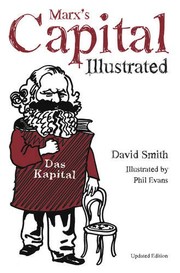
Marx's Capital Illustrated
This is one of the best ways to approach one of the most important blocks of text from modern history. Das Kapital is as inaccessible as it is important, and David Smith does an amazing job at simplifying its concepts without removing the substance.
About this book
""[Marx's Kapital: An Illustrated Introduction is] valuable and in some respects more so than all the interpretations and popularizations I have read."-- C.L.R. JamesRichly illustrated, strikingly accessible, and surprisingly comprehensive, David N. Smith and Phil Evans present Karl Marx's Capital as it was meant to be: in graphic novel form. "--

Washington Bullets
Yet another look at what Parenti started talking all those years ago, Vijay Prashad continues on the trail of declassified CIA documents and continues to explore the lies being told by the empire.
About this book
Washington Bullets is written in the best traditions of Marxist journalism and history-writing. It is a book of fluent and readable stories, full of detail about US imperialism, but never letting the minutiae obscure the larger political point. It is a book that could easily have been a song of despair – a lament of lost causes; it is, after all, a roll call of butchers and assassins; of plots against people’s movements and governments; of the assassinations of socialists, Marxists, communists all over the Third World by the country where liberty is a statue. Despite all this, Washington Bullets is a book about possibilities, about hope, about genuine heroes. One such is Thomas Sankara of Burkina Faso – also assassinated – who said: ‘You cannot carry out fundamental change without a certain amount of madness. In this case, it comes from nonconformity, the courage to turn your back on the old formulas, the courage to invent the future. It took the madmen of yesterday for us to be able to act with extreme clarity today. I want to be one of those madmen. We must dare to invent the future.’ Washington Bullets is a book infused with this madness, the madness that dares to invent the future.
Oppose book worship
Seminal text, inviting all to cultivate the mind, but to not forget that practicing that knowledge is what makes it valid.
About this book
Unless you have investigated a problem, you will be deprived of the right to speak on it. added anonymously.

The Shock Doctrine
Although some of its claims reek of liberalism, Naomi managed to encapsule the general overview of the latest stage of capitalist decay.
About this book
The Shock Doctrine: The Rise of Disaster Capitalism is a 2007 book by the Canadian author and social activist Naomi Klein. In the book, Klein argues that neoliberal free market policies (as advocated by the economist Milton Friedman) have risen to prominence in some developed countries because of a deliberate strategy of "shock therapy". This centers on the exploitation of national crises (disasters or upheavals) to establish controversial and questionable policies, while citizens are too distracted (emotionally and physically) to engage and develop an adequate response, and resist effectively. The book advances the idea that some man-made events, such as the Iraq War, were undertaken with the intention of pushing through such unpopular policies in their wake. Some reviewers criticized the book for making what they viewed as simplifications of political phenomena, while others lauded it as a compelling and important work. The book served as the main source of a 2009 documentary feature film with the same title directed by Michael Winterbottom. (Source: Wikipedia)
Why Women Have Better Sex Under Socialism
A fascinating telling of the material reality faced by women and a strong comparison between real study cases.
About this book
In a witty, irreverent op-ed piece that went viral, Kristen Ghodsee argued that women had better sex under socialism. The response was tremendous -- clearly she articulated something many women had sensed for years: the problem is with capitalism, not with us. Ghodsee, an acclaimed ethnographer and professor of Russian and East European Studies, spent years researching what happened to women in countries that transitioned from state socialism to capitalism. She argues here that unregulated capitalism disproportionately harms women, and that we should learn from the past. By rejecting the bad and salvaging the good, we can adapt some socialist ideas to the 21st century and improve our lives. She tackles all aspects of a woman's life - work, parenting, sex and relationships, citizenship, and leadership. In a chapter called "Women: Like Men, But Cheaper," she talks about women in the workplace, discussing everything from the wage gap to harassment and discrimination.

The Communist Manifesto
One of the most quoted books in existence, yet somehow most people have never read it. It is incredibly simple in premise, and if understood, humanity would be in an infinitely better place today.
About this book
Available under a Creative Commons Attribution-ShareAlike License: http://www.marxists.org/archive/marx/works/1848/communist-manifesto/ One of the most influential political tracts ever published this short book succinctly explains the aims and purpose of the Communist League of the 19th century, giving the author’s theories of the class struggle which they assumed would inevitably lead to world wide communism. Full text available at Project Gutenberg too: http://www.gutenberg.org/files/61/61.txt
What is to be done?
Seminal pamphlet, one of the most practical ways of looking at the steps needed to form a workers revolution!
About this book
The pamphlet... outlined a broad plan of organisation in which everyone would find a place for himself, become a cog in the revolutionary machine, a cog, which, no matter how small, was vital to the working of the machine. The pamphlet urged the necessity of intensive and tireless efforts to build the foundation that had to be built if the Party was to exist in deeds and not in words..." (Nadezhda Krupskaya, Reminiscences of Lenin.) First published in early 1902, What Is to Be Done? remains a classic of Marxism on the building of the revolutionary party, which sets out the party's role as the organiser and director of the revolution. The pamphlet was written as part of a conflict with the opportunism of the Economists, who emphasised 'bread and butter issues' rather than theory.
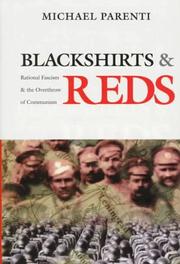
Blackshirts and Reds
Parenti spent decades speaking against imperialism, but unlike many other American writers of this time, he called out the actual issues rather than resorting to individualism and bad actors.
About this book
A bold and entertaining exploration of the epic struggles of yesterday and today. Blackshirts & Reds explores some of the big issues of our time: fascism, capitalism, communism, revolution, democracy, and ecology. These terms are often bandied about, but seldom explored in the original and exciting way that has become Michael Parenti's trademark. Parenti shows how "rational fascism" renders service to capitalism, how corporate power undermines democracy, and how revolutions are a mass empowerment against the forces of exploitative privilege. He also maps out the external and internal forces that destroyed communism, and the disastrous impact of the "free-market" victory on eastern Europe and the former Soviet Union. He affirms the relevance of taboo ideologies like Marxism, demonstrating the importance of class analysis in understanding political realities and dealing with the ongoing collision between ecology and global corporatism.
Receive the next turn
New fragments by email, when there is something to say. No tracking pixels beyond what the mailer needs, and you can leave at any time.